







Electric cars (EVs) have moved from niche innovation to mainstream transportation in record time. With advances in battery technology, government incentives, and growing environmental awareness, the automotive industry is rapidly evolving. But what does the future hold for electric cars in the coming years? Let’s explore the trends and technologies shaping the road ahead.
1. Longer Range and Faster Charging
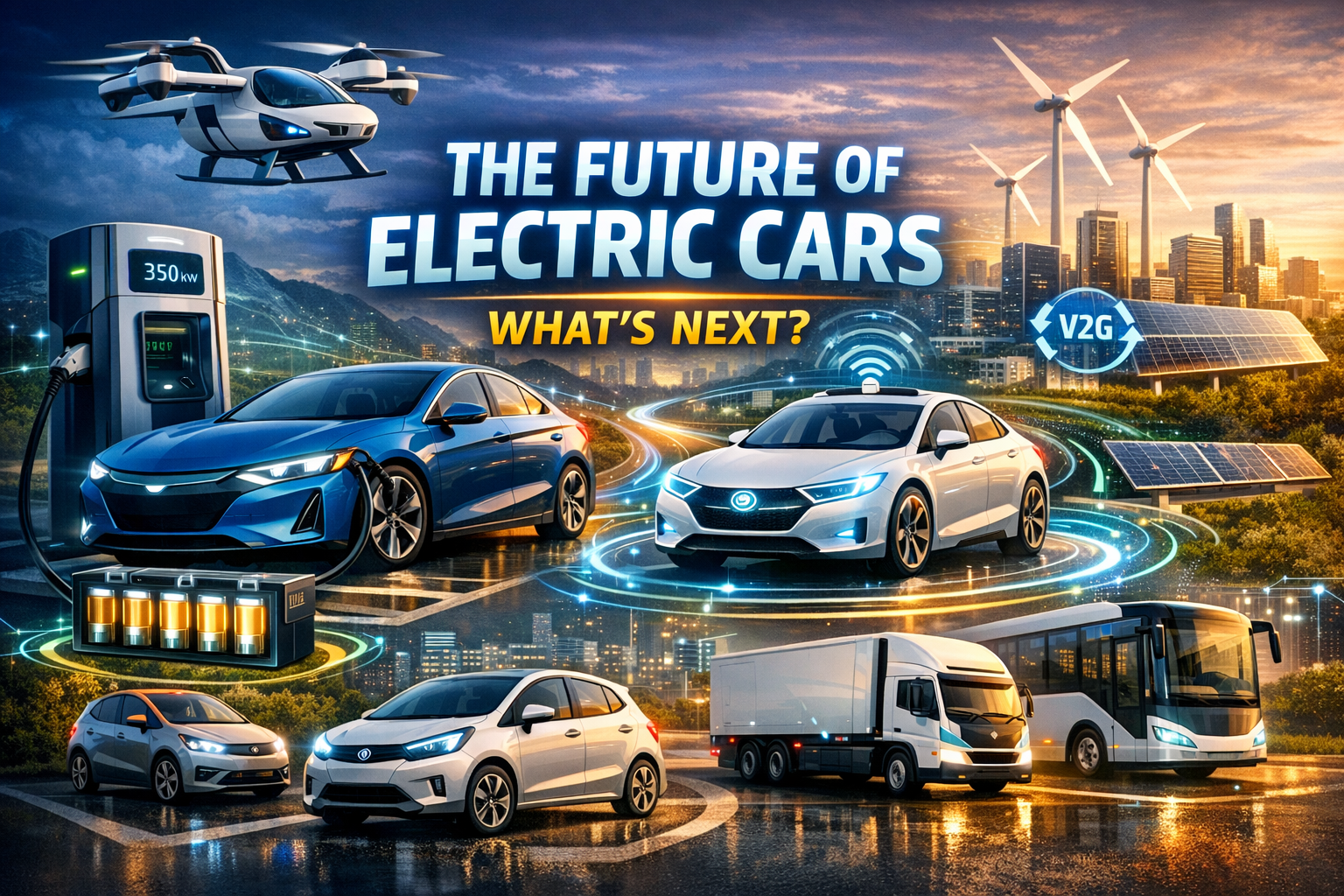
One of the biggest hurdles for EV adoption has been range anxiety. Fortunately, new battery technologies are dramatically increasing driving ranges while reducing charging times. Solid-state batteries, in particular, promise higher energy density and shorter charging cycles, making long-distance travel more convenient than ever.
2. Affordable EVs for Everyone
As production scales up and battery costs decrease, electric cars are becoming more affordable. Manufacturers are introducing entry-level models that rival traditional gas-powered cars in price, making EVs accessible to a broader audience.
3. Autonomous Driving Integration
Self-driving technology is moving hand-in-hand with electric vehicles. Advanced driver-assistance systems (ADAS) are already standard in many EVs, and fully autonomous features are on the horizon. Future EVs will not just be cleaner—they’ll also be smarter, safer, and more efficient on the road.
4. Sustainable Materials and Eco-Friendly Manufacturing
The future of electric cars isn’t just about emissions—it’s about sustainability throughout the vehicle’s lifecycle. Manufacturers are increasingly using recycled and eco-friendly materials, reducing the environmental impact of production, and creating circular economies for batteries.
5. Smart Charging Networks
The next generation of charging infrastructure will be smarter and more integrated. Vehicle-to-grid (V2G) technology allows EVs to feed energy back into the grid, helping balance electricity demand and providing potential income for EV owners. Ultra-fast charging stations along highways will make long trips more practical than ever.
6. Connected and Customizable Experiences
Electric vehicles are becoming digital hubs on wheels. From AI-driven navigation to personalized in-car experiences, future EVs will integrate seamlessly with smartphones, smart homes, and even smart cities. Expect software updates that continually improve your car’s performance and features.
7. Expanding Beyond Cars
Electric mobility isn’t limited to personal cars. Electric trucks, buses, and even aircraft are gaining traction. As battery technology improves, the vision of a fully electric, low-emission transportation ecosystem becomes increasingly realistic.
Final Thoughts
The future of electric cars is electric, connected, and autonomous. These vehicles will transform not just how we drive, but how we live, work, and interact with cities. For consumers, the promise is clear: cleaner, smarter, and more convenient transportation is just around the corner.
Whether you’re considering your first EV or simply following innovation, the road ahead is exciting—and it’s moving fast.