







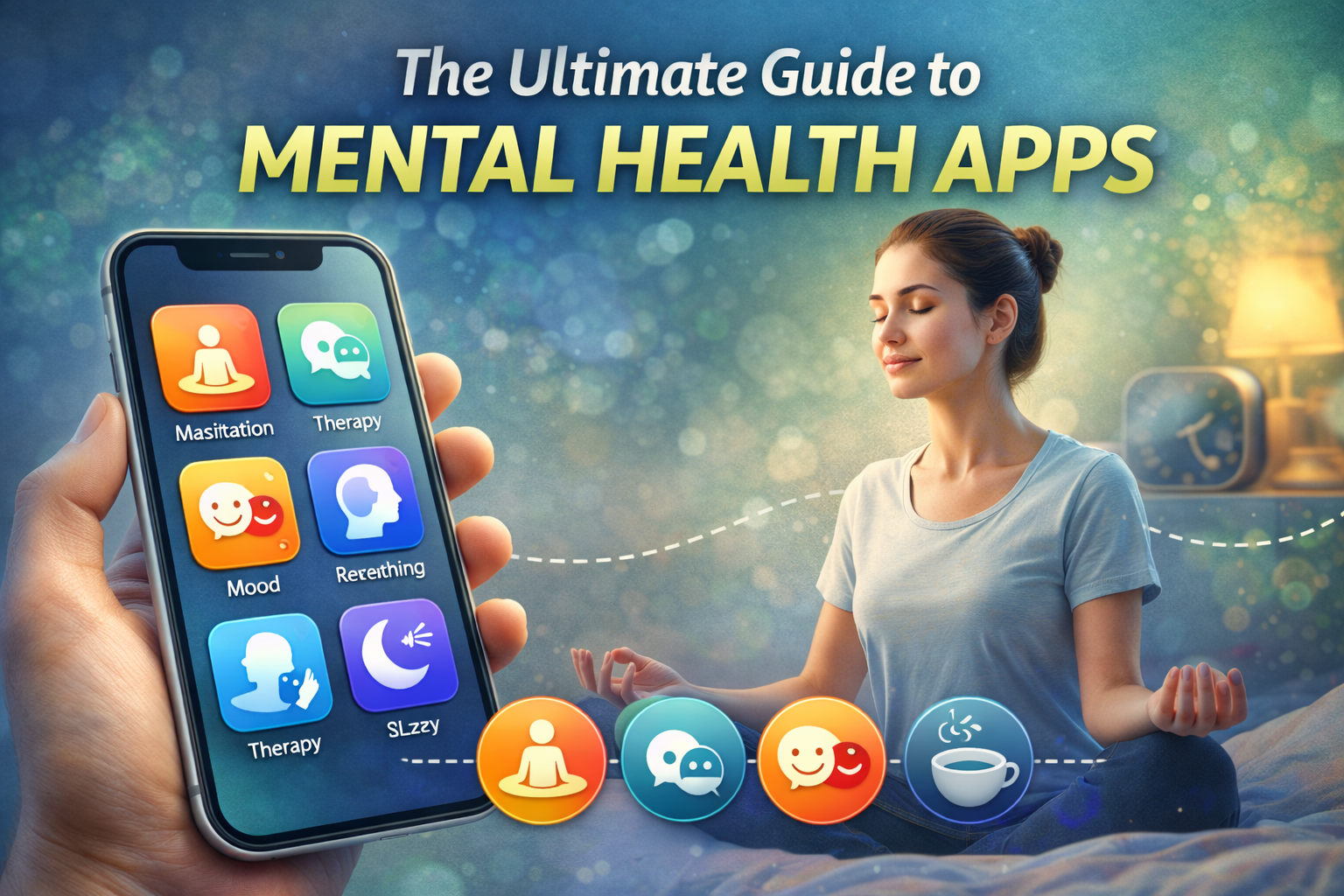
In today’s fast-paced world, taking care of your mental health is more important than ever. Luckily, technology can help. Mental health apps have exploded in popularity, offering everything from meditation and mood tracking to therapy and stress management. But with so many options, how do you know which ones really work? Here’s your ultimate guide to mental health apps.
Why Mental Health Apps Can Help
Mental health apps aren’t a replacement for professional therapy, but they can:
- Provide daily tools and exercises to manage stress and anxiety.
- Offer guided meditation or breathing exercises for relaxation.
- Help track moods, habits, and triggers to understand patterns.
- Make mental health support accessible anytime, anywhere.
Popular Categories of Mental Health Apps
1. Meditation and Mindfulness
Apps like Headspace or Calm guide you through meditation, breathing exercises, and mindfulness practices. They help reduce stress, improve focus, and even improve sleep quality.
2. Therapy and Counseling Apps
Platforms such as BetterHelp or Talkspace allow you to connect with licensed therapists via text, chat, or video. This can be especially helpful for those who find in-person therapy challenging or time-consuming.
3. Mood and Habit Trackers
Apps like Daylio or Moodnotes let you track your mood, habits, and triggers over time. Seeing patterns visually can help you understand what impacts your mental health and develop healthier habits.
4. Stress and Anxiety Management
Apps focused on stress relief, like Sanvello or Pacifica, combine CBT (Cognitive Behavioral Therapy) techniques, relaxation exercises, and community support to help manage anxiety and depression.
5. Sleep and Relaxation
Good sleep is essential for mental health. Apps like Sleep Cycle or Pzizz provide guided sleep stories, ambient sounds, and smart alarm tracking to improve your sleep quality.
Tips for Choosing the Right App
- Check credibility: Look for apps created by licensed professionals or backed by research.
- Ease of use: Choose an app with an interface you enjoy and can navigate easily.
- Customization: Apps that adapt to your goals, preferences, and progress are more effective.
- Cost vs. Benefit: Some apps are free, others subscription-based. Try free versions first to see what fits your needs.
Using Apps Effectively
Mental health apps work best when used consistently. Treat them like a daily habit: a few minutes of meditation, mood logging, or guided therapy exercises can make a noticeable difference over time.
Final Thoughts
Mental health apps are powerful tools that can supplement your self-care routine, provide guidance, and track progress. While they aren’t a replacement for professional help, they can be a practical, accessible way to improve well-being and build resilience. Explore, experiment, and find the apps that work best for you.