









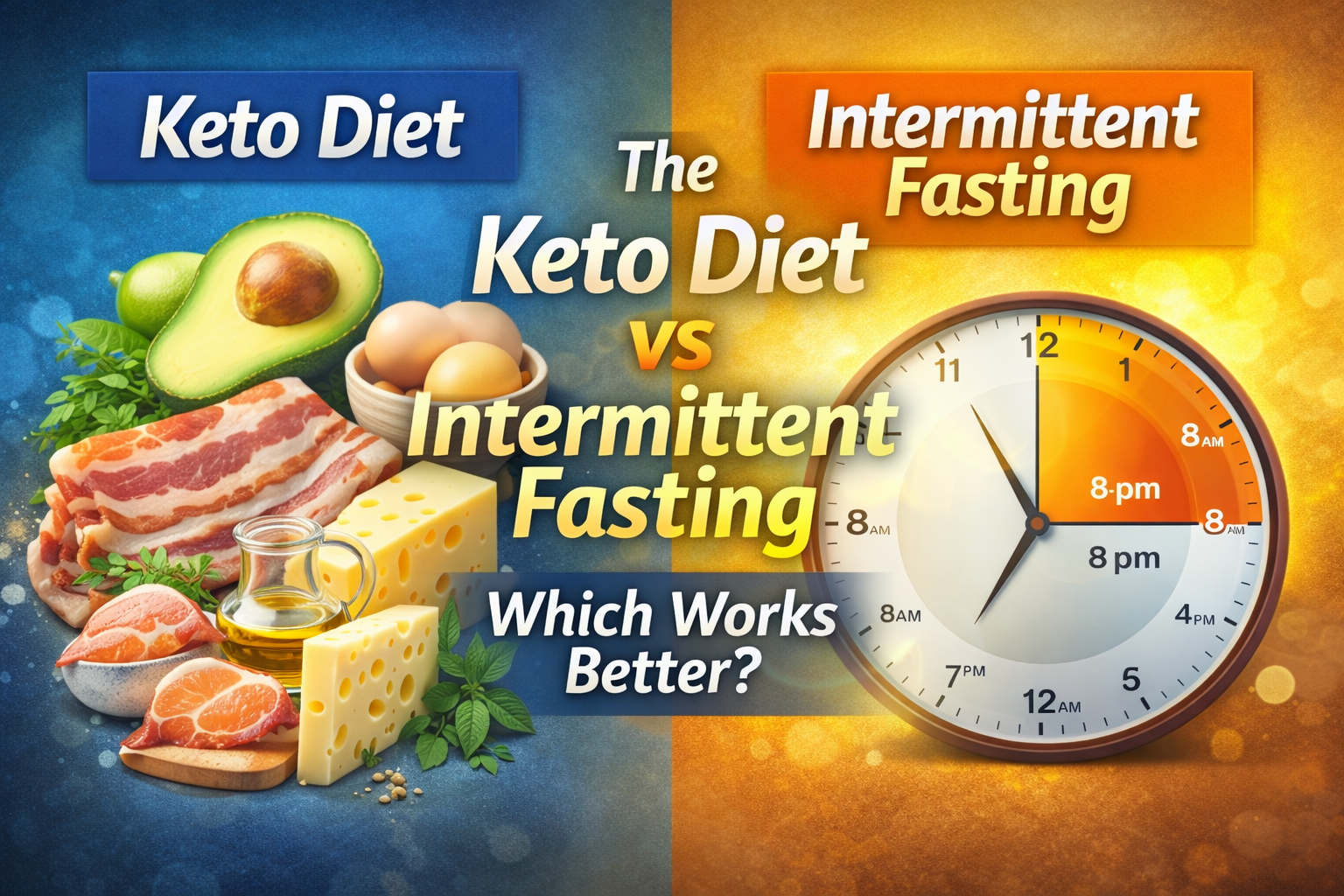
When it comes to weight loss and improving overall health, two popular strategies often come up: the Keto Diet and Intermittent Fasting (IF). Both have passionate supporters, but which one really works better? Let’s break it down, look at the science, and help you decide which approach might fit your lifestyle.
What is the Keto Diet?
The ketogenic diet focuses on low-carb, high-fat eating. By drastically reducing carbohydrates and increasing healthy fats, your body enters a state called ketosis, where it burns fat for fuel instead of glucose.
Benefits of Keto:
- Rapid initial weight loss due to water loss and fat burning
- Appetite suppression from higher fat intake
- Improved blood sugar control in some people
Considerations:
- Can be restrictive and challenging to stick to long-term
- May cause “keto flu” during the first week
- Nutrient deficiencies if not planned carefully
What is Intermittent Fasting?
Intermittent Fasting isn’t about what you eat—it’s about when you eat. Popular methods include:
- 16:8: Fast for 16 hours, eat during an 8-hour window
- 5:2: Eat normally 5 days a week, restrict calories for 2 days
- Alternate-day fasting: Eat one day, fast the next
Benefits of IF:
- Can help reduce calorie intake without counting calories
- May improve insulin sensitivity and support fat loss
- Flexible and doesn’t restrict specific foods
Considerations:
- Hunger and low energy during fasting periods
- Not recommended for everyone (e.g., people with certain medical conditions)
Keto vs Intermittent Fasting: Side-by-Side Comparison
| Feature | Keto Diet | Intermittent Fasting |
|---|---|---|
| Approach | High-fat, low-carb | Timing-based eating |
| Weight Loss | Rapid, especially initially | Gradual, sustainable |
| Flexibility | Restrictive | Flexible, can fit any diet style |
| Energy Levels | Some may feel tired at start | Hunger management required |
| Long-term Adherence | Can be difficult | Easier for many people |
Can They Be Combined?
Yes! Some people follow Keto while doing intermittent fasting for potentially faster fat loss and better appetite control. However, combining them can be intense for beginners, so it’s best to start slowly and listen to your body.
Which Works Better?
There isn’t a one-size-fits-all answer. It depends on your:
- Lifestyle and schedule
- Food preferences
- Health goals
- If you love high-fat foods and want rapid results, Keto may suit you.
- If you prefer flexibility and don’t want to count carbs, Intermittent Fasting could be easier to stick with.
Final Thoughts
Both strategies have scientific backing and success stories. The “better” approach is the one you can consistently follow without feeling deprived or stressed. Start with one, monitor your results, and adjust as needed—sometimes, a hybrid approach is the perfect fit.